Frequently Asked Questions
The most-asked questions about primates.
What exactly counts as a primate?
Primates are an order of placental mammals that includes lemurs, lorises, monkeys, apes, and humans. They are united by traits like forward-facing eyes, grasping hands with opposable thumbs, and relatively large brains for their body size.
How many primate species exist today?
There are roughly 230 recognized living species spread across every continent except Australia and Antarctica. The greatest diversity is found in tropical forests of Africa and South America, while Madagascar hosts a unique assemblage of lemurs found nowhere else.
What's the simplest way to tell a monkey from an ape?
The classic shorthand is that most monkeys have a prehensile or long tail while apes (gibbons, orangutans, gorillas, chimpanzees, bonobos, and humans) do not. Apes also tend to be larger, lack a bony tail, and have broader shoulders adapted for brachiation or knuckle-walking.
Who are the 'main characters' every primate fan should know?
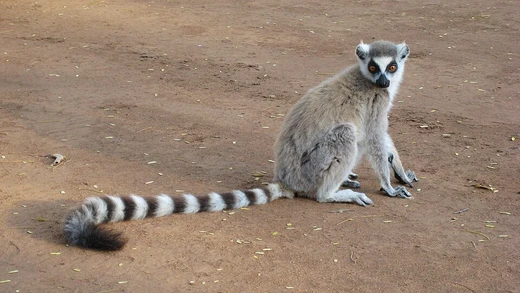
The great apes—gorillas, chimpanzees, bonobos, and orangutans—are the most-studied and culturally prominent members of the order. Among smaller primates, the ring-tailed lemur, the spider monkey, and the tiny pygmy marmoset are often the go-to examples for illustrating primate diversity.
Where should a newcomer start reading about primates?
A good entry point is a broad overview of the order's evolutionary history, then a deep dive into one great-ape species to understand behavior and ecology. From there, branching out to Old World monkeys, New World monkeys, and the prosimians (lemurs, lorises, tarsiers) builds a full picture.
What are a few must-know anatomical or behavioral facts?
Primates possess a post-auricular gland that produces a waxy secretion used in scent-marking, a trait shared across the order. Most species are diurnal and social, but tarsiers and many lemurs hunt at night, and a handful of species (like the aye-aye) use a specialized elongated middle finger for extracting insects from bark.
What is a landmark moment in primate research?
Jane Goodall's long-term observations of wild chimpanzees at Gombe, beginning in 1960, shattered the assumption that tool use was uniquely human. Equally pivotal was the 1974 discovery of the 'Lucy' skeleton in Ethiopia, which reshaped understanding of early hominin locomotion.
Are all primates endangered?
Not all, but the IUCN lists the majority of primate species as threatened, vulnerable, or endangered, with habitat loss and illegal wildlife trade as the leading pressures. A few generalist species, such as the rhesus macaque and the bonobo (though the latter is endangered), maintain relatively stable populations in parts of their range.
Do primates only live in jungles?
While tropical rainforests harbor the richest assemblages, primates also thrive in savannas (baboons, patas monkeys), highland cloud forests (mountain gorillas), mangroves (proboscis monkeys), and even urban environments where species like macaques and capuchins have adapted to human-adjacent habitats.
What makes primate social life so fascinating to study?
Primates exhibit a remarkable range of social structures, from the fission-fusion groups of chimpanzees to the strict one-male harems of orangutans. Behaviors like grooming alliances, cooperative hunting, maternal care, and in some species, same-sex bonding, make them a favorite model for understanding the roots of human social cognition.