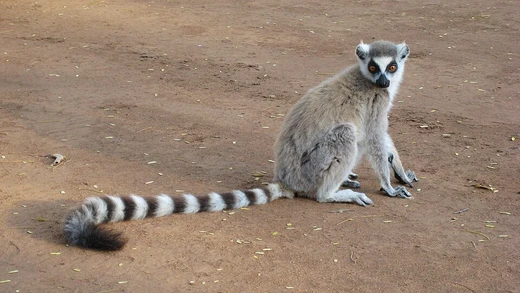
Sifaka
Medium-sized lemurs known for their distinctive alarm call and leaping.

Sifakas are lemurs of the genus Propithecus, within the family Indriidae and order Primates. They are found only on the island of Madagascar. The common name is an onomatopoeia of their characteristic 'shi-fak' alarm call. All species of sifakas are threatened, ranging from endangered to critically endangered.
- field
- Primatology
- known_for
- Vertical clinging and leaping locomotion; bipedal sideways hopping on the ground
- native_to
- Madagascar
- conservation_status
- Threatened (endangered to critically endangered)
- gestation_period
- Four to five months
- life_expectancy
- Up to 20 years
Lore & Background
Sifakas are medium-sized indriids with a head and body length of 40 to 55 cm and a weight of 3 to 6 kg. Their tail is as long as their body, differentiating them from the Indri. Their fur is long and silky, with coloration varying by species from yellowish-white to blackish-brown, and their round, hairless face is always black. Like all lemurs, they have a toilet-claw on the second toe and a toothcomb for grooming. Sifakas move by vertical clinging and leaping, maintaining an upright position while leaping from tree trunk to tree trunk. They are skillful climbers and powerful jumpers, able to make leaps up to 10 m from one tree to the next. On the ground, they move with bipedal, sideways leaping movements of the hind legs, holding their forelimbs up for balance. They are diurnal and arboreal. Sifakas are herbivores, eating leaves, flowers, and fruits. They spend much of the day sunbathing on branches. They live in groups of up to 13 animals, have firm territories marked with scent glands, and may peacefully co-exist with other lemur species such as the red-bellied lemur and common brown lemur. Predators include the fossa and hawks; sifakas avoid attacks with agile acrobatics but have been known to fight off a Madagascar ground boa. Gestation lasts four to five months, with a single offspring born in July. Young are weaned after about six months and reach full maturity at two to three years.
Reader's Guide
Sifakas are significant as a genus of lemurs endemic to Madagascar, representing a distinct branch of primate evolution. Their unique mode of locomotion—vertical clinging and leaping in trees and bipedal sideways hopping on the ground—distinguishes them from other primates. All species are threatened, with habitat loss from slash-and-burn cultivation, cattle raising, logging, and mining having contributed to a 52% loss of forested land since the 1950s. This makes sifakas a key indicator species for conservation efforts in Madagascar. Their social structure, including territorial defense and occasional infanticide, provides insight into primate behavior. The genus includes two species groups—the P. diadema group and the P. verreauxi group—each containing multiple species. Their reliance on forest cover, as seen in Perrier's sifaka, underscores the urgency of addressing threats to their survival. The sifaka's alarm call, which gives them their common name, and their ability to leap up to 10 meters, are notable adaptations.
Did You Know?
- The common name 'sifaka' is an onomatopoeia of their characteristic 'shi-fak' alarm call.
- Sifakas can leap up to 10 meters from one tree to the next.
- Their tail is as long as their body, which differentiates them from the Indri.
- All species of sifakas are threatened, ranging from endangered to critically endangered.
Form and Movement in the Canopy
Sifakas are medium-sized lemurs belonging to the genus Propithecus within the family Indriidae, restricted entirely to Madagascar. Their head and body measure between 40 and 55 centimeters, and they weigh roughly three to six kilograms. A tail equal in length to the body sets them apart from their close relative, the indri. Their long, silky coat ranges from pale yellowish-white to deep blackish-brown depending on the species, while the round, hairless face is uniformly black. Like all lemurs, they possess a toothcomb and a specialized toilet-claw on the second toe for grooming. Their most striking trait is locomotion: sifakas cling vertically to tree trunks and launch themselves in leaps of up to ten meters between trees. On the ground, they adopt a distinctive bipedal, sideways-leaping gait, holding their forelimbs aloft for balance. They are strictly diurnal and arboreal, spending idle hours stretched out on branches basking in the sun.
Social Life and Territorial Defense
Sifakas live in groups of up to thirteen individuals, larger than those of other indrid lemurs. Each group maintains a well-defined territory marked through scent glands, though the boundaries of neighboring groups can overlap. Within their own range, sifakas defend aggressively against intruders of the same species; successful invasions can lead to the death of males, a group takeover, and even infanticide. Despite this intra-species hostility, they can share habitat peacefully with other lemur species, including the red-bellied lemur and the common brown lemur. Their primary predators are the fossa, a puma-like carnivore native to Madagascar, and aerial hunters like hawks. Sifakas typically evade danger through agile acrobatics high in the canopy, but they are also capable of direct confrontation, biting and scratching attackers. Remarkably, they have even been observed fighting off a Madagascar ground boa. Their herbivorous diet consists of leaves, flowers, and fruit, and their characteristic shi-fak alarm call gives the species its common name.
Life Cycle and Reproduction
Reproduction in sifakas follows a relatively compact cycle. After a gestation period of four to five months, a single offspring is born, typically in July. Newborns cling tightly to their mother's belly in the earliest weeks, gradually transitioning to riding on her back as they grow. Weaning occurs at approximately six months of age, and the young reach full sexual maturity between two and three years. Under favorable conditions, sifakas can live up to twenty years. Their diurnal, arboreal lifestyle means that all these developmental stages unfold in the treetops, where the mother's skill as a climber and jumper is essential for keeping the infant safe from predators such as the fossa and hawks. The relatively long juvenile period compared to the gestation length suggests a significant investment in offspring development, a trait shared across many primate lineages. The common name sifaka itself derives from the onomatopoeic shi-fak alarm call, a sound that likely plays a role in alerting the group to danger during these vulnerable early stages of life.
A Fragile Legacy: Threats and Diversity
All sifaka species face serious conservation challenges, with their status ranging from endangered to critically endangered. Since the 1950s, conservative estimates indicate that slash-and-burn agriculture, cattle grazing, logging, and mining have destroyed approximately 52 percent of Madagascar's forested land. Species like Perrier's sifaka, which depends entirely on extensive forest cover, receive little to no institutional attention for their conservation. The genus Propithecus encompasses ten recognized species divided into two groups: the P. diadema group, which includes the diademed, Milne-Edwards's, silky, and Perrier's sifakas, and the P. verreauxi group, comprising Coquerel's, Verreaux's, von der Decken's, crowned, and golden-crowned sifakas. This remarkable diversity, all confined to a single island, underscores how much irreplaceable evolutionary heritage is at risk. The loss of habitat not only threatens individual species but erodes the entire ecological web in which sifakas, fossas, hawks, and other Malagasy fauna are intertwined.
Frequently Asked Questions
What is a Sifaka?
Sifakas are a group of medium-sized lemurs in the genus Propithecus, belonging to the Indriidae family. They are primates found exclusively on the island of Madagascar.
What makes Sifakas so visually and behaviorally distinctive?
They are best known for their vertical clinging-and-leaping style of moving through trees and a quirky sideways two-legged hop when traveling on the ground. Their common name itself is an onomatopoeia of the sharp 'shi-fak' alarm call they produce.
Where in the world can you find Sifakas?
Every recognized sifaka species is endemic to Madagascar, meaning no wild populations exist anywhere else on the planet.
What is the conservation outlook for Sifakas?
All sifaka species are currently threatened, with individual species classified anywhere from endangered to critically endangered. Their restricted range on a single island makes them especially vulnerable to population declines.
What do we know about Sifaka reproduction and lifespan?
A sifaka's gestation period runs about four to five months, and individuals can live up to roughly twenty years.
More in Primates 1-24
Spotted an error? Know more?
This is a living reference — every entry is fact-audited, and reader corrections feed straight into our audit queue. Suggest an edit · See this site's audit record